Welcoming your new puppy Home
The First 48 Hours
Bringing home a new puppy is exciting, but it can also be overwhelming for them. They have just left everything they have ever known. Keep the first couple of days calm and allow your puppy to settle at their own pace. Avoid introducing lots of visitors or taking them to busy places immediately.
Helping Your Puppy Settle
Provide a quiet place where your puppy can rest undisturbed. Establish a routine from day one with regular meal times, toilet breaks, play sessions and naps. Consistency helps puppies settle quickly and builds confidence.
What to Expect During the First Night
Your puppy may cry or whine during their first few nights. This is completely normal. They have gone from sleeping with their littermates to sleeping alone. Keep them close to you if possible and offer reassurance without encouraging attention-seeking behaviour. Most puppies settle within a few nights. They may also have upset tummies due to the stress or changes in food.
Insurance
Each puppy comes with .5 weeks free insurance through the Kennel Club. Please make sure you transfer the puppy into your name so that your insurance is valid. I personally recommend getting your own insurance for the puppy from the beginning as well.
When to Contact Us
We are always here to help. Whether you have a simple question or need advice about behaviour, feeding or training, please don't hesitate to get in touch. We would much rather answer a small question early than have you worry unnecessarily.
Feeding
Current Diet
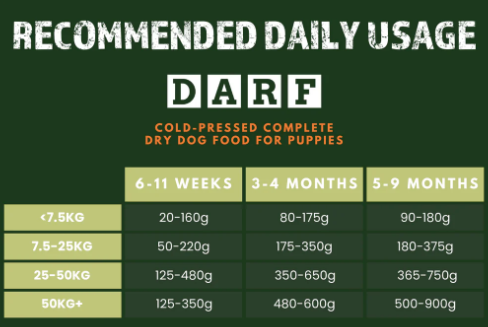
Your puppy has been weaned onto a high-quality raw diet and DARF cold-pressed and is used to eating 4 meals per day. We recommend continuing the same food for at least the first week and transition slowly over to your new food.
Recommended food
We recommend https://www.nutriment.co.uk/ for raw feeding - and DARF from https://sabrepetfood.co.uk/
Feeding Quantities and Schedule
At eight weeks of age, puppies should usually be fed three to four meals per day. Follow the feeding guide provided with your chosen food, adjusting amounts according to your puppy's body condition rather than simply their appetite.
Changing Food Safely
If you decide to change your puppy's food, do so gradually over 7–10 days by slowly increasing the new food while reducing the old. Sudden changes can upset your puppy's digestive system.
Safe Treats
Treats should be used for training and given in moderation. Small pieces of cooked chicken, your puppy's regular kibble or commercially prepared puppy treats are all suitable.
Foods to Avoid
Never feed chocolate, grapes, raisins, onions, cooked bones, alcohol, caffeine, xylitol (found in sugar-free products) or macadamia nuts. If your puppy eats something toxic, contact your vet immediately.
Health
Vaccination Schedule
Your puppy has received their first vaccination. Your vet will advise when the second vaccination is due and when it is safe to begin exploring the outside world. Your vaccination card also has this information.
Worming
Regular worming is important throughout your dog's life. Follow your vet's recommended schedule as your puppy grows. The puppies have been wormed at 3, 5 and 7 weeks.
Flea and Tick Prevention
Speak to your vet about an appropriate preventative treatment based on your location and your dog's lifestyle.
Weight Monitoring
Keep your puppy lean as they grow. You should be able to feel their ribs easily without seeing them prominently. Avoid overfeeding, as excess weight places unnecessary strain on developing joints.
When to Contact Your Vet
Contact your vet if your puppy develops persistent vomiting, diarrhoea, refuses food for more than 24 hours, becomes unusually lethargic, struggles to breathe, or shows any signs of pain or illness.
Toilet Training
Establishing a Routine
Take your puppy outside regularly, especially after waking up, after meals, after play and before bedtime. Praise them immediately when they toilet in the correct place.
Preventing Accidents
Supervise your puppy indoors and take them outside frequently. Accidents are part of learning and should never be punished.
Night-time Toilet Trips
Young puppies often need one or two toilet breaks overnight. Keep these trips calm and quiet before returning them straight to bed.
Common Mistakes
Avoid expecting too much too soon. Don't punish accidents or wait for your puppy to ask to go outside. Consistency and patience are key.
Crate Training
Introducing the Crate
Make the crate a positive place by feeding meals inside it and leaving toys or treats for your puppy to discover. Allow them to explore it voluntarily.
Sleeping Arrangements
Position the crate somewhere your puppy feels part of the family, particularly during the first few weeks. This helps reduce anxiety and encourages better sleep.
Building Positive Associations
The crate should never be used as punishment. Your puppy should see it as a safe, comfortable place to relax.
Avoiding Separation Anxiety
Gradually build up the amount of time your puppy spends alone. Start with just a few minutes and slowly increase the duration while keeping departures and arrivals calm.
Exercise
Appropriate Exercise by Age
Young puppies don't require long walks. Several short play sessions and opportunities to explore are far more beneficial than forced exercise. General rule is 5 minutes per 1 month of age per day.
Free Play vs Structured Walks
Free play allows puppies to rest when they need to and move naturally. Long, repetitive walks should be introduced gradually as your puppy matures.
Protecting Growing Joints
Avoid repetitive ball throwing, excessive jumping, long runs alongside bicycles or sustained exercise on hard surfaces while your puppy is still growing.
Mental Enrichment
Training games, food puzzles, scent work and exploring new environments all provide excellent mental stimulation and are often more tiring than physical exercise alone.
Socialisation
Socialisation is about much more than simply meeting lots of people and dogs. The goal is to teach your puppy that the world is safe, normal and nothing to be worried or overly excited about.
Many owners unintentionally encourage their puppy to greet everyone they meet. While well intentioned, this can create a dog that becomes overexcited or distracted whenever they see people or other dogs. Instead, focus on calm exposure rather than constant interaction. It's perfectly fine to walk past people and dogs without stopping.
Positive Experiences
Introduce your puppy to a variety of people, places, sounds and surfaces, but always keep experiences calm and positive. If your puppy seems overwhelmed, create more distance and let them observe at their own pace.
Meeting People and Dogs
Quality is more important than quantity. Calm, friendly, fully vaccinated dogs and sensible people provide the best experiences. Your puppy doesn't need to meet everyone they see.
Household Noises
Continue exposing your puppy to everyday sounds such as vacuum cleaners, televisions, washing machines and kitchen appliances. Treat these noises as normal and reward calm behaviour.
Car Travel
Take your puppy on regular short journeys to help build confidence. Always travel safely using a crate or suitable seatbelt harness.
Building Confidence
Allow your puppy to explore new environments at their own pace and never force interactions. Reward them for checking in with you and remaining calm. We want our puppies to see the world without becoming overstimulated by it, learning that you are the most rewarding and reassuring part of any new environment.
Training
Name Recognition
Say your puppy's name once and reward them immediately when they look towards you. This forms the foundation for future training.
Recall
Practise recall regularly using rewards, praise and enthusiasm. Never call your puppy to tell them off.
Lead Walking
Introduce the lead gradually in a quiet environment before progressing to short walks. Reward your puppy for walking beside you without pulling.
Bite Inhibition
Redirect mouthing onto suitable toys. If play becomes too rough, calmly end the interaction for a short period before trying again.
Reward-Based Training
Reward the behaviours you want to see. Positive reinforcement builds confident, willing dogs and strengthens your relationship.
Basic Manners
Begin teaching simple behaviours such as sit, wait, coming when called and settling quietly. Keep sessions short, fun and rewarding.
Grooming
Brushing
Brush your puppy regularly from an early age so they become comfortable being handled. This also helps remove loose coat and prevents matting.
Bathing
Only bathe your puppy when necessary using a gentle puppy shampoo. Thoroughly dry them afterwards, especially during colder weather.
Nails
Check your puppy's nails regularly. Frequent handling of their paws from an early age makes future nail trimming much easier.
Ears
Inspect your puppy's ears weekly for redness, unpleasant smells or excessive wax. Speak to your vet if you notice anything unusual.
Teeth
Begin introducing tooth brushing using a dog-specific toothbrush and toothpaste. Good dental care starts early.
Seasonal Coat Care
Expect increased shedding during spring and autumn. More frequent brushing during these periods helps keep the coat healthy and reduces loose hair around the home.
Equipment
Crate
Choose a crate large enough for your dog to stand, turn around and lie down comfortably. Dividers can be useful while your puppy is growing.
Bed
Provide a supportive, washable bed in a quiet area where your puppy can rest undisturbed. I recommend cheap beds to begin with until your puppy is toilet trained and has finished teething.
Lead and Collar
Use a lightweight collar with identification and a standard lead for everyday use. Ensure both fit correctly as your puppy grows.
Toys
Provide a variety of safe chew toys, enrichment toys and interactive toys to encourage appropriate chewing and mental stimulation.
Food and Water Bowls
Choose sturdy, easy-to-clean bowls and ensure fresh water is available at all times.
Long Line
A 5–10 metre training line is an excellent tool for safely practising recall while allowing your puppy freedom to explore.
Grooming Brushes
For Labradors, a rubber grooming mitt and slicker brush are usually sufficient. Golden Retrievers benefit from a slicker brush, metal comb and pin brush to maintain their longer coat.
FAQ
Is my puppy sleeping too much?
No. Young puppies typically sleep 16–20 hours a day. Plenty of rest is essential for healthy growth and development.
Why are they biting?
Puppies explore the world with their mouths, and biting is a normal part of teething and play. Redirect them onto appropriate toys and avoid rough play with hands.
Why won't they eat?
It's common for puppies to eat less during the first day or two while they settle into a new home. Keep meals calm and consistent. If they refuse food for more than 24 hours or seem unwell, contact your vet.
Can they go upstairs?
Occasionally is fine, but avoid repeated trips up and down stairs while your puppy is growing for the first year. Carry them where practical, especially during the first few months.
Can they meet other dogs?
Yes, but only dogs you know are friendly, healthy and fully vaccinated. Avoid contact with unknown dogs until your vet advises it's safe after vaccinations.
When can they swim?
Once they're confident and the weather is suitable. Start in shallow, calm water and never force them in. Always supervise them closely. Swimming lessons are preferred.
When can they go off lead?
Only once you have built a reliable recall in safe, enclosed areas. There is no set age but focus on training and confidence before allowing off-lead freedom in open spaces.